

A short history of Radiotherapy - Part 2: The megavoltage era. From the early sixties until now.
Author:
Jean-Claude Horiot
Date of publication: 01 October 2025
Last update: 01 October 2025
Abstract
In the first half-XXth century, orthovoltage X-Rays, Radium brachytherapy, radiation physics, radiation biology and the emergence of clinical research allowed the pioneers of Radiology to establish radiotherapy as a new treatment modality of cancer treatment (see Part I). However, it did not challenge Surgery as the best curative management in most solid tumors. Megavoltage radiotherapy with Co60 and linear accelerators, allowing to deliver tumoricidal dose to the deepest tumors while to better spare normal tissues, was going to radically modify the treatment choices, used alone or in combination with surgery and chemotherapy. Selected examples of that historical move will be given in various tumors sites, boosted by the spectacular development of cooperative clinical research. The most recent research avenues will conclude that “short history”.
WHY DID MEGAVOLTAGE X-RAYS (LINACS) AND/OR GAMMA-RAYS (COBALT 60) REVOLUTIONIZE RADIOTHERAPY?
To understand it, a young radiation oncologist of the 21th century should try to imagine what happened to one of his X-rays orthovoltage ancestor living in the early fifties of the 20th century when he got access for the first time to a megavoltage unit. From a day to the next, he was jumping into another world: Reaching tumoricidal doses to deep tumors without skin reactions, or just producing a moderate erythema, using homogeneous beams with sharp penumbras, high outputs allowing short treatment times (hence more patients being treated per day), collimators built to treat larger aeras and volumes (even larger with linacs), benefiting of safer calibration and calculations of dose distribution to tumor and normal tissue… Above all, these progresses provided a much better treatment tolerance and suddenly increased tumor control in rates in most solid tumors. Of course, such a rapid move was not without serious risks: Orthovoltage techniques needed to be forgotten and new rules for treatment planning, patient positioning, calibration and dosimetry controls had to be implemented. Some severe irreversible complications occurred when such rules were either ignored or not respected, including spinal cord injury, bone fractures, necrosis, stenosis, the absence of severe skin reactions no longer being a warning to the unwise radiotherapist.
Megavoltage beams modified also the practice of Oncology in a continuous irreversible process. Up to the fifties, except for a few large Hospitals and/or Tumor Institutes, orthovoltage radiation was delivered by radiologists dividing their time between diagnostic radiology and therapeutic radiology. The training and national diplomas of radiology allowed both practices. Hospitals and private clinics hosted radiology and radiotherapy in the same department. That situation suddenly changed. In the early seventies, teaching of both specialties divided into diagnostic radiology, therapeutic radiology and nuclear radiology. The acting radiologists had to quickly make their choice not to be submerged by the rapid increase of knowledge and the arrival of a new generation of “true radiation oncologists”. Departments of Radiation Oncology had to be built to house several bunkers for megavoltage units, rooms for specific use of radiology tools such as simulators, CT scans dedicated to radiotherapy only, and be organized to optimize the interactions of medical physicists, radiation oncologists, radiation technicians. Space and tools for patient’s initial examinations and workup, controls during treatment and follow-up. Specific units for modern brachytherapy were also part of that revolution of radiotherapy. The optimal move being often the integration of all medical and paramedical oncology disciplines in specific cancer centers, University and large public or private Hospitals.
From the mid-sixties to the eighties, another radical transformation revolutionizes the practice of Oncology: Up to that time, significant progress only came from individuals and teams working in large hospitals who were also responsible for the training of the various specialties of oncology. It became soon obvious that a closer communication and interaction between all actors, nationally and internationally was necessary to boost and speed up progress and its application to cancer patients. Large societies were founded almost everywhere with a specific aim: Organizing yearly meetings of cancer specialists e.g. ASTRO and ESTRO [7] for radiation oncologists in the USA and Europe, ESMO for medical oncologists. Major groups joined their efforts into the Federation of European Society (FECS) which aim was to a link between all cancer societies and to share their progress in a large meeting held every other year.
The monthly publications by ASTRO and ESTRO, respectively the “red journal” and the “green journal” became the best peer review platforms for the recognition and diffusion of the significant outcomes of clinical research. The European Organization for Cancer Research, (EORTC, 8), was launched in 1962 by a group of visionary oncologists under the leadership of Henri Tagnon became the motor of cooperative European research. Of interest, in 1974, its Radiochemotherapy group split into the Lymphoma group and the Radiotherapy group (renamed in the mid-90s Radiation Oncology group, ROG,). Among the fruitful European ventures, the European School of Oncology (ESO) was founded in 1982 by Umberto Veronesi then played a leading role in teaching oncology disciplines and promoting their interactions. Naturally such a listing is not exhaustive. The same individuals contributed to the birth and development of several of these societies. Space is too short to mention the names of all major contributors to this move to maturity. However, I would blame myself to seem to ignore the major support of a few of them for the birth of European radiotherapy, Klaas Breur in Amsterdam. Maurice Tubiana from the IGR in Villejuif, Jerzy Einhorn in Stockholm and apologize for all those I do not mention. A younger generation [13] immediately spent their energy in sowing seeds into this well-prepared ground, Emmanuel van der Schueren from Leuven, Michael Peckham from London, Jens Overgaard from Aarhus… Let’s not forget radiation Physicists, and radiation biologists without whom nothing would have been possible.
From the early 80s, Emmanuel van der Schueren [13] was indeed the main organizer of nearly all European ventures aiming at developing cooperation between oncology centers as well as building up the corporate spirit and administration of radiation oncologists, physicists and biologists into the ESTRO. His keen vision of the future and relentless energy to stimulate all of us led to a solid structuration of our discipline into yearly meetings, research and education tools. His premature death in 1998 left us orphans.
As a result, the management of cancer patients quickly improved. The interaction between treatment disciplines and organ specialists became closer with the appearance of subspecialties like neuro-oncology, head and neck oncology, pediatric oncology… Hence, a significant improvement of cancer management resulted from joint research ventures of several disciplines.
A SILENT REVOLUTION: THE PRESERVATION OF TEETH IN IRRADIATED PATIENTS TO THE HEAD AND NECK
[17] Up until 1970, the horrific full mouth extraction (of all teeth including the good ones!) was the rule when both salivary glands had to be irradiated with high doses in head and neck cancers and even in malignant lymphomas. The reason justifying this awful need was the unavoidable permanent destruction of salivary tissues resulting to severe xerostomia and diffuse dental decay, the last step being unmanageable osteoradionecrosis, alimentation, and speech problems, severe infection and sometimes lethal outcome. During my training at the MDAH in Houston, the first randomized trial was activated by Thomas Daly to evaluate the prevention of post-radiation dental caries using a high fluoride contents gel in dental carriers for at least 5 minutes per day. The trial was stopped after the recruitment of a few patients: All patients without fluoride applications developed caries versus none among those who strictly observed the prescription of daily fluoride application. When I came back to France in 1972, my first task was to convince one of my friends, a pharmacist, to reproduce this high fluoride contents gel. I started immediately a program of systematic dental preservation in patients at high risk of radiation-induced xerostomia. The project was warmly welcome by the dental surgeons while being strongly criticized and even opposed by older colleagues! The program included a pre-treatment complete dental and periodontal clinical and radiological evaluation with restoration of superficial caries and extraction of not restorable ones. Complete healing before the start of radiotherapy while providing daily oral hygiene instructions, manufacture of customized upper and lower carriers, fluoride applications starting during radiotherapy, joint regular dental and oncological follow-up to ensure lifetime treatment compliance. The program met an immediate success, even before long-term results were achieved. With a 10 year-follow-up, thousands of patients benefited from his systematic dental preservation. A 3 % failure rate was most often secondary the abandon of the fluoride applications. concomitant to cancer recurrences. Most of these few failures did not result in osteoradionecrosis. This dental fluoride prevention in irradiated patients at risk of severe xerostomia is now applied everywhere.
QUALITY ASSURANCE IN RADIOTHERAPY: A MAJOR STEP INITIATED BY THE EORTC RADIOTHERAPY GROUP (ROG).
Multicenter cooperative research was not common in the early eighties. Hence the various radiation physics checks of equipment, treatment planning and patient’s set up were left to the responsibility of local teams. Soon after the activation of the first EORTC radiotherapy trials, we understood that even slight differences could alter the reproducibility of protocol designs and ruin the interpretation of their outcome. At this time, the only quality control undertaken in our group consisted in checking the protocol compliance of the forms transmitted to the Brussels data center. Hence, we activated a systematic radiotherapy quality assurance program in each participating center and protocol ([13] [19] [20] [21]). One Gy was it really one Gy everywhere? Were the radiation physics parameters of the megavoltage unit, reliable under all gantry positions? The interpretation of the specifications of the protocol where they understood and implemented in the same way? It would be too long to describe all checks in detail. The first ten years, this program started with independent on-site reviews, followed later by new on-line transmission allowed by computer technology. The first visits convinced everybody, regardless of the size and fame of participating centers. Observed variations, classified as standard deviation, acceptable and unacceptable deviations led to immediate corrections and whenever they raised some discussion, to define and accept uniform criteria. Meanwhile a close cooperation was established with the IAEA in Vienna and with numerous nationalradiation physics societies. These programs and their specifications played a major role in promoting the safety and overall quality of radiotherapy inside and outside EORTC. The tremendous success of this move within EORTC was followed by the development of quality assurance reviews in most cooperative groups including medical oncology and even surgery!
THE ICRU REPORTS
[22] [23] [24] [25] [26] [27] [28] [29] [30]
The International Commission on Radiological Units and Measurements (ICRU) was established in 1925 with the aim to develop international standards for radiological units and measurements (see above).
It was revived in the 50s-70s to include recommendations on dosimetry, radiation protection, and radiobiology better adapted to the use of megavoltage beams.
A listing of the most relevant reports to clinical radiotherapy since 1972 is given in the bibliography.
Reports 38, 50, 62 and 83 are essential to ensure safety and reproducibility of the high accuracy high doses delivered by present megavoltage techniques and equipment, based upon individual patient’s imaging slices. The definitions of target volumes should be accurately respected to ensure that the proper prescribed dose is delivered to various parts of the tumor bed and surrounding normal tissues. These volumes should be carefully delineated by the radiation oncologist on each representative imaging slice.
The Gross Tumor Volume (GTV) represents the palpable or visible/demonstrable extent of the tumor.
The Clinical Target Volume (CTV) encompasses the GTV and any areas with potential microscopic disease spread.
The Planning Target Volume (PTV) accounts for variations in patient positioning, organ motion, and setup uncertainties.
The Internal Target Volume (ITV) takes into consideration internal physiological movements and variations in the size, shape, and position of the CTV.
The Organ at Risk (OAR) includes structures of critical normal tissues whose radiation sensitivity may significantly influence treatment planning and dose constraints.
RADIOBIOLOGY: HOW TO FOSTER THE EFFICACY OF MEGAVOLTAGE BEAMS?
Altered fractionation
[38] Delivering a single fraction per day, five consecutive days per week, resulted only from being the best convenience for doctors and patients. Radiobiologists explored further the consequences of the number of fractions per day, interfraction time and dose per fraction, on cell survival, repair of sublethal damage, repair between fractions, cell synchronization, normal cells and tumor cells sensitivity. It appeared that hyperfractionation schemes might result in a better chance of tumor control and a lower risk of normal cells damage. Of interest, the best theoretical differential effect was expected with an infinite number of fractions of a low dose per fraction which was in fact what was happening with low dose rate brachytherapy! A few clinical trials with external low dose rate radiotherapy (e.g. sessions of 4-6 hours per day during a week) confirmed the radiobiology prediction. However, using a megavoltage unit to treat one or even two patients per week, obviously limited the practical application of this principle. Twice a day hyperfractionation represented the other end of the experimental designs: Most of the normal cells repair of sublethal damage was occuring within a 6-hour interfraction time. Hence, a 15 per cent higher dose could be given to tumor cells without increasing damage to normal cells. Moreover, the higher total dose given over a standard overall time (let’s say 80 Gy versus 70 fractions, within a 7-week overall time, would combine the theoretical advantages of hyperfractionation and accelerated fractionation (identical or higher total doses delivered within a shorter overall time). Several randomized clinical trials were activated from the early eighties to the mid-nineties. Recruitment was slow, probably because of the practical difficulty to treat patients twice-a-day at a 6-hour interval. The first randomized trial to be published (1992) was an EORTC trial comparing hyperfractionation to normal fractionation, 70 fractions versus 35 fractions in 7 weeks, respectively 80 Gy versus 70 Gy, in T2-T3 oropharyngeal carcinoma [15]. It confirmed the radiobiology rationale with a 20% increase in locoregional control which converted into a 10% increase in survival. There was just a moderate increase in acute toxicity without impairment of late normal tissue damage despite a higher total dose. Soon after, a rather similar trial was reported in the USA with identical conclusions.
In 1997 the radiotherapy group of EORTC again first published the results of accelerated hyperfractionation versus conventional fractionation trial in head and neck carcinomas [16]: 70 Gy in 5 weeks and 45 fractions (3fractions per day) compared to 70 Gy in 35 fractions and 7 weeks. The accelerated fractionation schedule was a split course with a 2-week gap, resulting in only 15 days of treatment instead of 35 days for the conventional regimen. Final results showed a significant advantage of the accelerated hyperfractionated arm in tumor control with a trend to an increased acute toxicity. Hyperfractionation and accelerated fractionation survived over a decade and then were gradually limited to a few indications in patients unable to receive chemotherapy and in some pediatric oncology indications (brain stem tumors). In fact, combined radiochemotherapy with cisplatin in head and neck trials resulted in comparable outcomes than hyperfractionation. The ease of such treatment for large groups of patients, added to the unbeatable support of pharmaceutical industry led to the near oblivion of twenty years of exciting research on newer fractionation schemes!
In 2010, An exhaustive meta-analysis was performed for trials of hyperfractionation and accelerated radiotherapy in head and neck cancers [1] concluding to the slight superiority of these schemes over conventional fractionation. Too late for prescribing it!
Major progress in radiotherapy techniques (IMRT, IGRT, stereotactic RT) and combinations with chemotherapy had already opened more interesting avenues than hyperfractionation schemes. Irony of science, they are leading to a move towards hypofractionation (the delivery of a fewer higher doses fractions)!
Since the 2010s, trials of hypofractionated radiotherapy undertaken in various cancer types has shown to be as effective as conventional fractionation, sometimes with fewer side effects.
In 2021, the HYPORT trial demonstrated that hypofractionated radiotherapy is safe and effective for prostate cancer. 42·7 Gy were given in seven fractions, 3 days per week for 2·5 weeks versus 78·0 Gy in 39 fractions, 5 days per week for 8 weeks.
In 2023, Studies have shown that hypofractionated radiotherapy in breast cancer is superior to conventional fractionation radiotherapy in terms of convenience and cost-effectiveness while achieving equivalent oncologic outcomes.
Stereotactic radiotherapy, which consists of a few high dose well localized radiotherapy fractions had already established the interest of such techniques in the management of brain metastases to maximize efficacy while minimizing neurocognitive side effects.
Radiosensitizers
Oxygen was first understood as being enhancing the effects of radiotherapy. Conversely hypoxia was increasing radio resistance. Radioresistance was often observed in hypoxic tumors and/or hypoxic parts of tumors. The challenge of all radiosensitizers stands into a significant differential effect between normal and tumor cells. From 1970 to 1990, several trials were conducted with chemical compounds of the family of nitroimidazoles, metronidazole, nimorazole (33) and misonidazole. Clinical outcomes did not confirm the level of action observed in the lab. An increased acute toxicity (exept for nimorazole) suggested that radiosensitivity of normal tissues was a limitation. From the 1990s, Tirapazamine, a bioreductive drug was investigated as a potential radiosensitizer because it was more cytotoxic under hypoxic conditions. Several randomized trials on NSCLC and head and neck cancers were conducted, some versus radiotherapy alone, others with cisplatinum and radiotherapy. Once again, the promising results of lab and early trials were not confirmed while more toxicity occurred. Like for fractionation studies, huge efforts had been involved without significant changes in practice.
Until the end of the 20th century, there were some periods in which the leadership in progress was led either by radiation physics and equipment or by biology discoveries. The beginning of the 21th century is clearly announcing that current research closely associates both approaches. Current research more selectively explores radiosensitivity of cancer cells through various mechanisms, such as enhancement of radiation DNA damage, hypoxia modification and cell cycle modulation. Progress in the accuracy of dose distribution such as IMRT and stereotactic radiotherapy reactivated interest in radiosensitizers that were abandoned because of the intensity of acute reactions within larger irradiated volumes. Radiosensitizers can alter the tumor microenvironment, making it more conducive to immune cell infiltration and activity. Molecularly targeted agents, inhibiting DNA repair mechanisms, e.g. PARP inhibitors, are currently explored as radiosensitizers by preventing tumor cells from repairing radiation-induced DNA damage. Novel agents such as bimetallic metal-organic framework-based radiosensitizers are being designed to enhance both radiodynamic therapy and immunotherapy. Nanoparticles are engineered to deliver radiosensitizing agents directly to tumor cells, improving specificity and reducing systemic toxicity. Ongoing research is also exploring the use of radiopharmaceuticals, which deliver radiation directly to cancer cells, as a form of targeted nanoparticle-based strategies, aiming at improving the efficacy and safety of radiation therapy in cancer management.
Hyperthermia
The first observation of the potential of hyperthermia against cancer was made even before the discovery of X-rays in 1866 when a German surgeon Carl D. W. reported a case of tumor regression in a patient with sarcoma of the face after a high fever caused by erysipelas infections. A century later, a renewed interest in hyperthermia emerged to enhance the effects of radiotherapy. Animal experiments were encouraging. Equipment was designed to be used with external irradiation and interstitial brachytherapy. The challenge was to reach a homogeneous temperature of about 43 degrees (Celsius) and to control it in the irradiated volume. Such a goal was difficult to achieve since biological homeostatic processes were immediately reducing temperature by increasing blood flow. Clinical trials combining hyperthermia with radiotherapy showed that hyperthermia could sensitize tumor cells to radiation. A few randomized trials resulted in rather moderately significant outcomes. A randomized multicenter trial investigating the addition of a weekly hyperthermia treatment to radiotherapy of patients with locally advanced breast cancer was recently reported by Jens Overgaard [34]. This EHSO (European Hyperthermia Society for Oncology) trial held from 1987 to 1993, concluded to significantly enhanced 5-year tumor control and yielded more patients surviving free from cancer in the hyperthermia group. Outside research trials, some remarkable isolated results were obtained in local recurrences that were considered incurable by conventional means.
The accuracy and control of hyperthermia delivery was improved by techniques such as microwave, radiofrequency, and ultrasound allowing for more targeted heating of tumors. Hyperthermia was also explored in combination with chemotherapy and other treatment modalities. The integration of hyperthermia with advanced imaging techniques, such as MRI, allowed for real-time monitoring of temperature distribution within tumors.
Ongoing research and clinical trials continue to explore the potential of hyperthermia in combination with radiotherapy. Advances in nanotechnology have led to the development of nanoparticle-based hyperthermia, which aims to enhance the delivery and efficacy of heat treatment.
Radiotherapy and hormonal therapy
Prostatic cancers represent the emblematic tumor site to demonstrate the benefit of such combination. Nearly all males living long enough will develop prostatic cancer cells. The first problem is to evaluate which prostatic cancers justify treatment. Reliable criteria have been defined to decide between observation, localized curative surgery or radiotherapy, hormonal treatment alone. The combination of curative radiotherapy and hormonal treatment was extensively investigated in more aggressive forms of prostatic cancers.
In 1941, Charles Huggins and Clarence Hodges demonstrated that prostate cancer is dependent on androgens, leading to the use of androgen deprivation therapy (ADT). This discovery earned Huggins the Nobel Prize in Physiology or Medicine in 1966. In the 1990s the development and use of luteinizing hormone-releasing hormone (LHRH) agonists, which suppress the production of testosterone, became a standard treatment for advanced prostate cancer in combination to high dose localized radiotherapy to the prostate and seminal vesicles. Both local control and survival were significantly improved compared to radiotherapy alone. The EORTC radiotherapy and urology groups were among the leaders of this successful research. Michel Bolla was the relentless coordinator of several pivotal trials (13). In a single decade (1990 to the early 2000s), there large trials modified the standard approaches. The first demonstrated a major 10-year survival improvement (58 % versus 40 %) in combining pelvic radiotherapy with 3-year ADT. Then short-term ADT, (RT with 6 months ADT) was compared to long-term ADT (RT with 3 years ADT). After a median follow-up of 6.4 years, the combination of RT and 6 months of ADT was declared inferior to RT plus 3 years of ADT (p = 0.64 for non-inferiority), meanwhile quality of life did not significantly differ between the two groups. The third protocol compared immediate postoperative RT or deferred RT in case of relapse in patients treated with radical prostatectomy (RP) with pT3a−b or with a R1 resection). 1005 patients were enrolled between 1992 and 2001. The 5-year clinical and biochemical PFS was significantly improved in the RT group (72.2% versus 51.8%, p < 0.0001), as well as the clinical PFS (p = 0.004). The 5-year cumulative loco-regional failure rate was significantly lower in the RT group (p < 0.0001), 5.2% versus 15.2% in the control group.
Since 2004, docetaxel, abiraterone acetate and enzalutamide brought more efficient drugs and androgen inhibitors to treat advanced/metastatic castration resistant prostatic cancers. High precision radiotherapy techniques are used in addition to destroy oligometastases. Overall, both radiotherapy hormonal therapy and chemotherapy are continuously improving patient outcomes in prostatic cancers.
Radiotherapy and chemotherapy
Finally, to conclude the list of our attempts to increase the tumor effects of radiation, the simultaneous use of chemotherapy and radiation provided the better outcomes, benefiting of the continuous progress of radiation delivery and new drugs development.
Should we consider chemotherapy as our best radiosensitizer? That would be a little bit reductive since chemotherapy has reached per se a major role in the curative management of cancers and that radiotherapy alone remain the most effective and less aggressive way to cure localized cancers. Meanwhile the combined chemoradiation approach is presently the reference treatment of many advanced solid tumors.
A synergistic effect is most likely responsible for the improved efficacy: a combined treatment producing more tumor cell killing than the sequential use of radiation and drugs. Of course, increased toxicity must be overcome, mostly by adjustments of each treatment protocol as well as individual adjustments especially for chemotherapy.
The development of cisplatin in the late 1970s was a major breakthrough leading to the first significant improvements when combining it to radiotherapy in a variety of moderately advanced and advanced solid tumors.
From the 80s, randomized trials confirmed better outcomes in locoregional control and disease-free survival of the combined regimens compared to radiotherapy alone in moderately advanced and advanced head and neck, uterine cervix, anus, esophagus and non-small-cell lung cancers. The use of newer chemotherapeutic agents, such as paclitaxel and docetaxel, was later integrated into combined treatment regimens.
Metanalysis of the trials combining radiotherapy and cisplatinum versus radiotherapy alone showed improved of 5-year overall survival of about 8% compared to radiotherapy alone [36] .
The combination of chemotherapy with radiotherapy enhances local and regional control of the tumor, reducing the likelihood of recurrence. A small reduction in Distant Metastases confirms the action of chemotherapy in controlling micrometastatic disease, although part of it might besecondary to the reduction of locoregional failures. These benefits justified the promotion of concurrent chemoradiotherapy as a standard of care in the management of locally advanced head and neck cancers.
As an example of such an approach, an EORTC ROG trial led by Jacques Bernier demonstrated the benefit of cisplatinum in postoperative management of stage III or IV head and neck cancers (13). Activated in 1994, it compared post-operative radiotherapy with or without concomitant cisplatinum. Compliance was not optimal in the radiochemotherapy arm with only half of the patients receiving the full protocol. Notwithstanding, there was a significant (p = 0.04) difference in PFS in favor of the combined-therapy group over the radiotherapy group. The 5-year survival rate was 40% in the radiotherapy group versus 53% in the combined-therapy group. The 5-year cumulative incidence of local or regional relapses of 31% and 18%, respectively. The incidence of late complications was not significantly different.
The advent of intensity-modulated radiotherapy (IMRT) and image-guided radiotherapy (IGRT) further enhanced the precision of radiotherapy thus reducing acute and late side effects. and improving the feasibility of concurrent chemoradiotherapy. The same strategy, also applied to other cancers of the upper aerodigestive tract and lung and became the standard of care for nasopharynx, esophagus and locally advanced NSCL.
Since 2010 The combination of chemoradiotherapy with targeted therapies and immunotherapies began to be explored. Advances in molecular profiling may allow for more personalized treatment approaches. Studies demonstrated the efficacy of adding immunotherapy, such as PD-1/PD-L1 inhibitors, to chemoradiotherapy in improving survival rates. The interaction between radiation therapy and immunotherapy in cancer treatment presents both synergistic and antagonistic effects. This complexity is a promising research avenue although not exempt of pitfalls to be overcome!
CONTRIBUTION OF MEGAVOLTAGE RADIOTHERAPY ALONE OR GIVEN IN COMBINATION WITH OTHER TREATMENTS IN SOME TUMOR SITES:
This “Short history” does not allow an exhaustive analysis of all tumor sites and variety of malignant diseases which largely benefited from radiotherapy combined to other types of treatment. Let’s just mention a few pathologies and common cancer sites:
Hodgkin’s disease
Most patients with Hodgkin’s disease would die from it before 1950. Radiotherapy began to be used for Hodgkin disease in the early 1900s as palliative treatment. Its radiosensitivity was noticed on superficial areas (e.g. neck nodes) and better results were obtained with deeper orthovoltage X-rays; From the 50s, the use of megavoltage radiotherapy directed to large nodal areas, supra and/or infra-diaphragmatic led to a rapid jump of cure rates as reported by Henry Kaplan (Stanford University, USA), Vera Peters (University of Toronto Canada) and Jean Papillon [https://www.oncopedia.wiki/key-players/jean-papillon] (Lyon, France) with radiotherapy doses of 30 to 40 Gy. From the 60s, the concept of extended-field radiotherapy generalized. Over the 70s, the combination of radiotherapy with chemotherapy quickly became the reference with the MOPP regimen. Such success resulted from a close cooperation between hematologists, radiation and medical oncologists. Since the 80s, the concept of involved-field radiotherapy emerged in patients with complete or almost complete regressions after 4 to 6 initial chemotherapy courses, reducing the radiation exposure to healthy tissues by targeting only the lymph nodes known to be involved with the disease. Lower doses of radiation (e.g. 20 to 25 Gy) decreased long-term side effects while maintaining high cure rates. From the 2000s, the advances in imaging techniques, such as PET-CT, have allowed for more precise targeting of radiotherapy. These developments have significantly improved the prognosis and quality of life for patients with Hodgkin disease, reducing the long-term risks associated with radiotherapy, such as secondary malignancies and cardiovascular disease.
Brain tumors
The EORTC ROG and Brain Tumor Group (BTG) conducted practice-changing randomized studies in low-grade (LGG) and high-grade glioma (HGG).
In LGG, post-operative radiotherapy demonstrated a highly significant improvement in disease-free survival (DFS) in the RT arm but no difference in overall survival (OS) in the observation arm. The benefit of the addition of Temozolomide (TMZ) was tested and showed improved progression-free survival in some high-risk LGG.
The identification of molecular markers such as IDH1/2 mutations and 1p/19q co-deletion has refined the classification and treatment of low-grade gliomas. These markers help predict response to therapy and guide the use of temozolomide and radiotherapy.
High precision techniques such as proton therapy and stereotactic radiosurgery are being evaluated for their potential to deliver more precise radiation doses, reducing damage to surrounding healthy tissue and improving outcomes.
In HGG, after a promising phase II study, a randomized trial was initiated in 1997 under the leadership of Roger Stupp [39] , comparing RT with and without TMZ. A highly significant improvement in OS was observed with the use of concomitant and adjuvant TMZ chemotherapy with RT. The trial also demonstrated that TMZ with RT was of most benefit to patients whose tumors presented with a methylation of the MGMT promoter gene. It also showed that with the combined TMZ−RT treatment, patients in the best prognostic category (RPA III) had a 5-year survival of about 30%, a 4-fold increase compared to RT alone. This trial established TMZ-RT a new standard for HGG [37] .
Breast cancers
The saga of locoregional breast cancer management is a remarkable example of multidisciplinary research and international cooperation. It illustrates the interaction of progress of two disciplines, herewith surgery and radiotherapy, resulting in better cure rates and quality of life.
Breast cancer, the most frequent cancer in women, often rather superficial, accessible to palpation and early diagnosis was a good target to orthovoltage radiotherapy. Since 1894, Halsted radical mastectomy remained the absolute reference curative treatment until the mid-fifties, leaving a narrow and difficult space for demonstrating the potential of radiotherapy: inoperable local and regional recurrences in tissues already fibrotic and hypoxic after surgery. Despite this selection poor prognosis patients, significant tumor regressions were often observed.
The concept of early post-operative radiotherapy arose in the thirties, although complicated by frequent severe skin damage and ribs fractures. However, the recognition of the radiosensitivity of most breast cancers led to a more frequent use of deeper orthovoltage X-rays (200 Kv and above) and even of interstitial brachytherapy in inoperable patients. Evidence of curability appeared in the late thirties. The concept of radiotherapy to the nodal areas, axilla, internal and supraclavicular nodes go back to that time and will fully apply to standard post-operative radiotherapy to these areas in case of positive nodes found after radical surgery. From the 50s on, Cobalt-60 teletherapy units, provided an almost ideal beam for breast cancers thanks to its skin sparing effect and deeper penetration allowing to reach tumoricidal dose with reversible skin acute effects. The demonstration of the efficacy of moderate doses of radiotherapy (45 to 50 Gy in 20-25 fractions and 4-5 weeks) to eradicate subclinical disease aggregates speeded up the acceptance of the treatment scheme proposed by Robert McWhirter in the early sixties: Patey and Dyson had already described the modified radical mastectomy in 1948 sparing the pectoral muscle. Mc Whirter further reduced the nodal extent of surgery to a limited axillary nodes dissection and added a post-operative radiotherapy to the chest wall and nodal areas. Not only recurrences rates were rare, but the quality of life of patients was radically transformed as shown by large US and European randomized trials in the mid-seventies.
The next step occurred in the early eighties by demonstrating the equivalence of the efficacy of limited surgery (lumpectomy) and radiotherapy, opening the era of a systematic breast conservative management for most early stages of breast cancers. Reducing even more the extent of nodal surgery to patients with a negative sentinel node (without axillary radiotherapy) became the international recommendation rule in the nineties, helped by a careful pre-operative diagnostic work-up to proper selection of the patients amenable to the lesser aggressive management.
A good cosmetic result had become an as equally important issue as the local control of disease. Both were of the endpoints of one of the largest randomized trials activated by the EORTC radiotherapy and breast groups in the nineties: The so called “Boost versus no boost trial”, briefly summarized by the comparison of lumpectomy and whole breast irradiation of 50 Gy with or without a 15 Gy boost dose to the tumor bed only. The original concept of the trial was made by B. Pierquin, E.van der Schueren and me. More than 5000 patients with strict selection criteria were accrued. Final analysis of the trial by Harry Bartelink and 27 co-authors [3], demonstrated that adding a boost significantly reduced local recurrence rates, particularly in younger patients, high-grade tumors, surgical margins status, and lymphovascular invasion. However, it also increased the risk of late radiation-induced side effects, such as fibrosis and poorer cosmetic results. Detailed analysis identified large groups (patients over 60 years) for which the delivery of a boost dose did not bring any benefit. Last but not least, the strict criteria for quality assurance of the radiotherapy techniques improved the overall quality of breast irradiation in Europe, by the delivery of a more precise and homogeneous multiplane dose distribution, thus contributing to a better cosmetic result.
In the late nineties, the introduction of intensity-modulated radiotherapy (IMRT) further improved the precision and effectiveness of radiotherapy by modulating the intensity of radiation beams within an organ of so different shapes and volumes.
In 2002, the Early Breast Cancer Trialists' Collaborative Group (EBCTCG) published a meta-analysis, confirming the long-term benefits of radiotherapy in reducing breast cancer recurrence and mortality.
The saga of radiotherapy of breast cancers would be incomplete without saying a few words about Intraoperative Radiotherapy (IORT). This concept, developed in the 90s, consists of delivering a single high dose of radiation directly to the tumor bed just during the surgery (by lumpectomy). Specific equipment using either low-kilovoltage X-rays or 9 to 12 Mev electron beams directed with various collimators sizes and protective shields to prevent ribs and lung irradiation. The expected benefit was to spare a 5 week-fractionated whole breast radiotherapy without increasing the risk of local recurrence. Indications were limited to good prognostic early-stage breast cancers in post-menopausal women. A group of patients was initially treated in the European Institute of Milano by the Umberto Veronesi team with promising results. Two large randomized trials were then conducted., The Eliot trial in Milano and the Targit-A in several countries including the UK, Germany, the USA, and Australia. Both trials focused on comparing the efficacy and safety of intraoperative radiotherapy to whole breast external beam radiotherapy (WBI) in breast-conserving surgery.
Early results from the TARGIT-A trial, were published in 2010 showing that IORT was non-inferior to WBI in terms of local recurrence rates for selected patients with early-stage breast cancer. This finding raised interest in IORT as a breast-conserving treatment option.
The ELIOT trial results were published in 2013 demonstrating that IORT with electrons was effective in reducing local recurrence rates, although some concerns about slightly higher recurrence rates compared to WBI were noted.
Besides these crude statements, nothing can express the high degree of satisfaction of patients who received a fully curative treatment over a single day (sentinel node biopsy, lumpectomy, IORT), with a high long-term cure rate and most often with better long-term cosmetic effects.
In 2014, the American Society for Radiation Oncology (ASTRO) included IORT in its guidelines for accelerated partial breast irradiation (APBI), recognizing it as an option for selected patients.
In 2020, Long-term follow-up data from the TARGIT-A trial confirmed the sustained efficacy and safety of IORT, reinforcing its role in the management of early-stage breast cancer.
Rectal Cancers
Since the early 20th Century, surgery remained for more almost a century the primary curative treatment for rectal cancer. Abdominoperineal resection (APR) resulted in permanent colostomies. Local and distant failures still occurred, usually leading to the death of patients.
Attempts to use radiotherapy showed that adenocarcinoma was not radioresistant as it was long believed, providing that enough dose could be delivered which was not possible until the use of megavoltage units. The curative use of high doses intrarectal orthovoltage X-rays brought the absolute demonstration of the radiosensitivity and radiocurability of rectal cancers. (see later)
Today A single manufacturer produces this specific low X-ray voltage equipment is (Ariane systems in UK) which can also be used for intraoperative radiotherapy of breast.
Despite the advantages of endocavitary low-energy X-rays radiation in frail elderly patients, newer surgical techniques such as Trans-anal Endoscopic Microsurgery and Trans Anal Minimally Invasive Surgery are more currently available to treat early-stage rectal cancers.
From the 70s, numerous trials experimented the addition of megavoltage radiotherapy to surgery. The reluctance of many surgeons to use pre-operative pelvic radiotherapy was more or less justified by the increase of surgical complications and better argumented by the lack of evidence of a significant reduction of pelvic failures rates. True advances occurred in the 1970s with the introduction of total mesorectal excision (TME) by Bill Heald. Surgical outcomes improved by reducing local recurrence rates while preserving sphincter function in cases of mid and upper rectum. This less aggressive surgery opened the way to a more frequent use of pre-operative radiotherapy with moderate doses still sufficient to control subclinical disease and even to reduce the bulk of tumor before surgery. In the 80s, randomised trials confirmed the sharp reduction of pelvic recurrence with sometimes a moderate increase of post-operative complications.
In the 1990s, the integration of neoadjuvant (preoperative) chemoradiotherapy became a standard approach for locally advanced rectal cancer. This strategy improved resectability, reduced tumor size, and allowed for more sphincter-preserving surgery. Short courses of pre-operative radiotherapy using hypo-fractionated regimens may reduce the burden of treatment.
In 2000s the development of more effective chemotherapy regimens, such as FOLFOX (5-FU, leucovorin, and oxaliplatin), and the use of targeted therapies like bevacizumab and cetuximab, further improved outcomes for rectal cancer patients.
Since 2010s the concept of total neoadjuvant therapy (TNT), which involves delivering all chemotherapy and radiotherapy before surgery, gained attention. This approach aims to maximize tumor downstaging before surgery and even sometimes to avoid surgery in low rectal cancers and/or elderly patients.
A special attention should be given to the curative management of low rectal cancers with intracavitary low-voltage X-rays, also called intracavitary contact brachytherapy:
The intracavitary radiotherapy of small rectal cancers, uses orthovoltage X-rays of 50-60 Kv . The technology was designed in the mid-30s by Henri Chaoul, a German radiologist from the University of Berlin. His name is also famous since he performed the original dental radiographs that later permitted the identification of the skull of Adolf Hitler! However, he would deserve more of our gratitude for the design of the Chaoul X-ray tube, originally manufactured by Siemens, characterized by a thin diameter allowing for endoscopic irradiation with a rather high output due to the very short distance (3 to 4 cm) between the emission of the beam and the treated area. The concept was improved by Philips and intrarectal applications were first made by Paul Lamarque in 1948 in Montpellier (France) and then extensively developed by my French mentor Jean Papillon [35] in Lyon. Huge doses (about 30 Gy per session!) are delivered by a 3 cm conic tube introduced through a range of specific endoscopes. The high output (20 to 30 Gy/minute) allows to treat elderly patients on an outpatient basis. Three or four sessions were delivered at a 2-3 weeks interval. It easy to understand that nearly all exophytic tumors of 3 cm or less quicky vanish. Often the last session was just given to a mucosal scar, thus delivering a biologically significant dose to the rectal wall. Slightly larger tumors, T2 or even early T3 could also benefit of contact therapy, delivered as a boost after external or concomitant megavoltage radiotherapy. Interstitial brachytherapy could also be used as a boost on residual infiltration of the rectal wall. This remarkable technique led to a high cure rate (about 90%) with sphincter preservation for T1 low rectal adenocarcinomas in the large series published by Jean Papillon, his pupils and followers since the mid-70s ([33] [11]). Although these remarkable results brought attention of the international community, the diffusion of the technique was slow for three main reasons. The scarcity of the radiation oncologists with some expertise in such endoscopic treatment, the disappearance of the only available equipment in the 90s, and the development of new surgical sphincter saving procedures. A modern equipment fitting with the current radiation protection rules was designed by the British Ariane systems and marketed in the early 2000s. What was missing was a randomized trial to convince everybody including the rectal surgeons!
As said earlier, contact radiotherapy could also be used as a boost dose during the sphincter saving management of T2-T3 low and mid rectal cancers. The randomized trial Opera, coordinated by Jean-Pierre Gérard (11,12), dealt with a selected group of such patients amenable to an organ preservation receiving neoadjuvant radiochemotherapy scheme, randomized to an external megavoltage radiotherapy (9 Gy) boost versus an intracavitary 50 Kv contact boost (90 Gy). It (accrued 148 patients from 2015 to 2020. In the in the primary efficacy analysis (2023), 141 patients were included with a median follow-up of 38·2 months. The 3-year organ preservation rate was 59% in group A (external radiotherapy boost) versus 81% in group B (contact-X-ray radiotherapy boost), p=0·0026. For patients with tumors less than 3 cm in diameter, 3-year organ preservation rates were 63% in group A versus 97% in group B (p=0·012). For patients with tumors of 3 cm or larger, 3-year organ preservation rates were 55% in group A versus 68% in group B (p=0·11). To conclude, Neoadjuvant chemoradiotherapy with a contact x-ray brachytherapy boost significantly improved the 3-year organ preservation rate, particularly for patients with tumors smaller than 3 cm. This approach can now be discussed and offered to operable patients with early cT2-cT3 disease as an alternative to surgery, especially when surgical procedures would expose the patient to the loss of sphincter or when a poor functional result might be expected with a risky sphincter saving surgical attempt. Let’s add that radical surgery can still be performed with a curative aim as a saving procedure, either in case of incomplete tumor regression or in most pelvic failures of such initial radiochemotherapy scheme.
The outcome of this pivotal trial should extend the use of intracavitary X-rays for selected forms of rectal cancers of various stages, either alone (T1) or combined to radiochemotherapy (T2, T3). A single modern specific equipment is currently available, the Papillon +, manufactured by Ariane/Clerad. It also gives access to the delivery of intraoperative breast radiotherapy.
Head and neck cancers. Organ preservation in larynx and pharynx cancers
In the thirties, orthovoltage X-rays were used in inoperable head and neck cancers with frequent tumor responsesalthough cure rates were rare because of local regional failures. Surgery remained the only curative management until the advent of megavoltage radiotherapy. Vocal cord cancers were optimal candidates for radiotherapy alone: early diagnosis, limited volume, and usually no lymphatic spread. Cures rates of 90 % were reported with doses of 60-70 Gy with good speech preservation. Radiotherapy alone was also shown to be curative in other head and neck sites such as nasopharynx, oral cavity and oropharynx, mostly in early stages, but also in more advanced disease. In France, under the leadership of François Baclesse and his followers A. Ennuyer and Jean-Pierre Bataini, in the USA by Gilbert Hungerford Fletcher, the techniques of radiotherapy were designed to treat simultaneously primary tumors and nodal areas, even when negative, following the concept of radiotherapy to usual sites of subclinical disease spread. In the 1970s, radiotherapy alone and surgery were challenging each other but were unable to organize randomized trials. From the 1980s, cisplatinum combined to radiotherapy convinced everybody to launched trials of radiochemotherapy versus surgery for laryngo-pharyngeal cancer, aiming primarily to preserve the organ and function, and to limit the use of surgery to salvage of failures. These early efforts laid the groundwork for combining radiotherapy with chemotherapy.
In 1991, the Department of Veterans Affairs Laryngeal Cancer Study Group demonstrated that induction chemotherapy followed by radiotherapy could preserve the larynx without compromising survival rates compared to total laryngectomy. This trial was pivotal in establishing the feasibility of organ preservation. In the following decade many trials investigated the sequence of treatments and novel drugs enlarging the choices of initial approaches as well as treatment of failures.
In 2003, the RTOG 91-11 trial compared three treatment strategies: radiotherapy alone, concurrent chemoradiotherapy, and induction chemotherapy followed by radiotherapy. Concurrent chemoradiotherapy provided the best laryngeal preservation rates without compromising overall survival, establishing it as the standard of care for advanced laryngeal cancer.
From the 2010s, the use of targeted therapies and immunotherapy were tested in combination with chemoradiotherapy. Current approaches to laryngeal cancer preservation are based upon advanced imaging techniques, personalized treatment plans based on genetic and molecular profiling, and novel therapeutic agents.
To summarize, radiotherapy has become a reference treatment in the curative management of early stages of head and neck cancers. It has also strengthened its role in the curative management of more advanced stages in combination to medical and surgical strategies.
Cancer of the uterine cervix: an interesting aspect of the epistemology of cancer incidence
]]In the 1950s]], Cervical cancer was one of the most common malignancies among women and often the most deadly cancer in developing countries. Early stages were amenable to cure with total hysterectomy and brachytherapy. Locoregional failures, metastases and death were the usual fates of more advanced cancers. From 1960s to 90s, radiotherapy progress with megavoltage units and brachytherapy completely modified the management: As shown by Gilbert Hungerford Fletcher in Houston, initial pelvic radiotherapy of 40-45 Gy to primary tumor and pelvic nodes was able to shrink clinically detectable disease and to eradicate subclinical disease (e.g. in nodes and parametria). One or two vaginal and uterine brachytherapy applications were able to destroy residual centro-pelvic disease. Large reports including all stages confirmed that such schemes of radiotherapy alone were equivalent to the best surgical results in early stages and far superior in moderately and advanced stages. Of interest, nodal irradiation was eliminating the need for lymphadenectomy in most cases.
All over the world, continuous advances in external radiotherapy and brachytherapy further refined the delivery of radiation with more accurate and safer dose delivery, reducing the severe late side effects to a few percent while reaching a 50-60 % cure rate in the more advanced stages. From the 80s, Cisplatinum had shown its efficacy, added prior or during radiotherapy to further enhance the curability moderately advanced and advanced cervix cancers.
Meanwhile, all teams who had spent time-consuming efforts and investments observed a sharply decreasing incidence of cervix cancer thanks to the introduction of the Pap smear test in the 1960s and regular screening programs allowing for early detection and treatment of precancerous lesions. The global burden remained high in developing countries particularly in low-income and rural populations where screening was less accessible. Unfortunately, the expensive costs of modern radiotherapy and brachytherapy tools precluded them from benefiting of the up-to-date progress.
The introduction of the HPV vaccine in the early 2000s marked a significant milestone when vaccination programs began to be implemented aiming at preventing HPV infections, the primary cause of cervical cancer.
Nowadays, at least in western countries, cervix cancer is becoming a vanishing disease. Let’s not regret all what we did to fight this now endangered species of disease. Let’s only dream that in a distant future, the disappearance of smoking habits and other novel vaccines will also make useless some of the tools we proudly develop
Anal Cancer
Most epidermoid cancers of the anus are remarkably radiosensitive, probably because of their frequent HPV origin. Hence, excellent results were obtained even before the megavoltage era, in particular with interstitial brachytherapy of T1 and early T2. The advent of Cobalt 60 allowed combinations of external beam radiotherapy and brachytherapy, extending the curability to more advanced anal cancer. The use of a direct perineal portal of 30 Gy in 2-3 weeks followed after a 4-6 week-gap by a brachytherapy boost of about 25 Gy allowed Jean Papillon to publish a large series of T1-T3 anal cancers with long-time unsurpassed cure rates and sphincter preservation with good function.
The next step was to reduce further the local and regional failure rates observed in the more advanced forms. Norman Nigro introduced in the early 1980s a protocol combining chemotherapy 5-fluorouracil (5 FU) and mitomycin C (MMC) with radiotherapy with significantly improved outcomes for patients with anal squamous cell carcinoma. reducing the need for radical surgery. In 1987, in collaboration with the EORTC Gastrointestinal Tract Cancer Group (GI Group), the ROG launched a phase III trial combining fluorouracil (5FU)–mitomycin-C (MMC) with radiotherapy alone in locally advanced anal cancer [2]. The combined treatment modality showed a significant improvement in loco-regional control and a gain in colostomy-free survival. A similar trial conducted in the UK showed that the benefit was also observed in early disease. These two pivotal trials have established Chemo-RT as standard treatment in anal canal cancer. Further trials optimized the dose of pelvic-perineal radiotherapy (reduced from 45 to 36 Gy and the reduction of the gap between the two courses of radiotherapy from 6 weeks to 2 weeks. IMRT techniques are increasing accuracy of RT delivery and decreasing acute and late toxicity.
Further studies investigated other drugs than MMC. So far MMC remains the drug of reference as shown by the RTOG 98-11 Trial comparing radiotherapy CRT with 5-FU and MMC versus 5-FU and cisplatin. The arm with MMC arm demonstrated superior disease-free survival and overall survival compared to the cisplatin arm.
EVOLUTION OF RADIOTHERAPY EQUIPMENT
The megavoltage era never stopped to produce more efficient equipment to allow radiation oncologists to tackle more efficiently most of cancer types. Radiation Physicists made a major contribution by developing dosimetry software allowing to use the progress of radiological imaging for customizing treatment planning to every patient case, making it more accurate and safer. The integration of modern imaging techniques to the delivery of radiation led to another revolution that we shall briefly summarize:
Stereotactic radiotherapy
Stereotactic radiotherapy (SRT) is a form of external beam radiation therapy that precisely delivers high doses of radiation to a targeted tumor while minimizing exposure to surrounding healthy tissues. It is often called stereotactic radiosurgery (SRS) when referring to single-session treatments, and stereotactic body radiotherapy (SBRT) when referring to treatments delivered over multiple sessions.
The concept of stereotactic radiosurgery was introduced in the 50s by the Swedish neurosurgeon Lars Leksell, who developed the Gamma Knife with multiple cobalt 60 sources converging to the well-localized target volume. Linear accelerators were then adapted for stereotactic treatments with collimators allowing thes “pencil beams”, expanding the use of SRT beyond intracranial lesions to other parts of the body. Advances in imaging and computer technology further refined the precision and application of SRT, leading to the development of SBRT for extracranial tumors.
SRT indications never ceased to expand thanks to the simultaneous progress and interactions of neuroradiology, treatment planning and radiation physics dosimetric softwares: Benign conditions such as arteriovenous malformations and acoustic neuromas, malignant tumors such as primary brain tumors and brain metastases, extracranial tumors, among which early-stage non-small cell lung cancer (NSCLC), liver tumors, spinal tumors, and oligometastatic disease of any site. The accuracy of SRT also permits treatment of localized radiotherapy recurrences. SRT has shown high local control rates for various tumors, often comparable to surgical outcomes, with the added benefit of being non-invasive.
High precision radiotherapy techniques: IMRT and IGRT
In the 1970s, the advent of computed tomography (CT) scans revolutionized treatment planning, allowing to a more customized and accurate targeting of tumors. In the 1980s, the introduction of three-dimensional conformal radiotherapy (3D-CRT) allowed for more precise delivery of radiation with an improved sparing of healthy tissues.
Intensity-Modulated Radiation Therapy (IMRT) uses computer-controlled linear accelerators to deliver precise radiation doses to one or several target volumes previously identified from CT simulation in treatment position. Developed in the 1990s, IMRT represented a significant advancement over conventional megavoltage radiotherapy by allowing for more precise dose distribution over complex target volumes close to critical organs, e.g. in the curative radiotherapy of prostatic cancers. Radiation is delivered with multiple converging beams or with complete or partial rotational arctherapy. The intensity of the radiation beams can be modulated, allowing higher doses to be focused on regions within the target volume while minimizing exposure to surrounding healthy tissues.
IGRT (Image-Guided Radiation Therapy) incorporates imaging techniques during each treatment session to improve the precision and accuracy of the delivery of radiation. IGRT is often used in conjunction with IMRT to ensure that the radiation is accurately targeted tumors. IGRT is indicated for tumors that are in constant movement (e.g., lung, liver, and prostate).
Various trials have shown that IMRT can improve local control rates and reduce toxicity compared to conventionally planned radiotherapy. It has been associated with better outcomes in terms of tumor control and reduced side effects, particularly in head and neck, lung and prostate cancers.
IGRT, further enhancîng the precision of IMRT is likely to improve treatment outcomes. It allows for higher radiation doses to be delivered safely, potentially improving tumor control rates while minimizing damage to surrounding healthy tissues. In summary, IMRT and IGRT represent significant advancements in the field of radiation oncology, offering improved precision and outcomes for patients with various types of cancer. Their development and integration into clinical practice have been driven by technological advancements and a better understanding of tumor biology and radiotherapy physics.
Adaptive Radiotherapy
Adaptive radiotherapy (ART) is an advanced approach in radiation therapy that allows for modifications to the treatment plan based on changes in the patient's anatomy or tumor characteristics during treatment (e.g. tumor shrinkage, patient weight loss, or organ movement). Adaptive radiotherapy requires access and experience in real-time imaging and monitoring to activate treatment adjustments: Re-planning and Re-optimization. Sophisticated software and hardware to ensure rapid adjustments. The benefits of ART are currently investigated. ART and stereotactic radiotherapy can be associated. An ultimate aim, although presently limited to very small target volumes, could reduce curative management to a single high dose fraction.
High Linear Energy Transfer (LET) particles
The concept of LET was introduced I the early 20th century, distinguishing between high LET (e.g., alpha particles, neutrons) and low LET (e.g., X-rays, gamma rays) radiation based on their energy deposition patterns in tissues. In 1940, Louis Harold Gray developed the concept of Relative Biological Effectiveness (RBE) of doses of neutrons. The use of ion beams for radiotherapy was first been proposed by Wilson in 1946. First applications in patients started in 1954 for protons, 1957 for helium and 1975 for heavier ions at the Lawrence Berkley Laboratory (LBL, USA). From the 1990’ies on, research and clinical application focused on protons and carbon ions. This form of high LET radiotherapy demonstrated increased biological effectiveness (RBE), particularly in hypoxic tumor cells. Clinical trials and the establishment of dedicated facilities for heavy ion therapy, such as the Heavy Ion Medical Accelerator in Chiba (HIMAC) in Japan, reported significant progress. Since 2000, advances in technology and a better understanding of radiobiology have led to the refinement of high LET radiotherapy techniques. The increased radiobiological effectiveness and the specific dose distribution (the Bragg peak) allow a maximal tumoricidal effect with almost ideal millimetric protection of normal tissues. Fewer than 100 centers worldwide offer these state-of-the-art treatment options. Patients are carefully selected for such treatments (usually radioresistant pathologies close to critical organs e.g. sarcomas of the base of the skull, or even hypoxic recurrent inoperable tumors in previously irradiated sites). Although the physics and biological advantages of heavy ions seem unsurpassed, the progress of modern IGRT and SBRT offer in most cancers an almost identical cure rate at a much lower cost. Megavoltage X-rays will probably remain the standard radiotherapy for a long time!
BRACHYTHERAPY (CURIETHERAPY) FROM THE 50S UNTIL NOW
Megavoltage beams did not reduce the use of interstitial and intracavitary brachytherapy. They just help to concentrate brachytherapy on what was its most successful indication: the delivery of localized tumoricidal radiation doses. Tumor regressions after external radiotherapy increased the opportunities to use brachytherapy as a high dose short and efficient boost on residual tumors or tumor beds not only in gynecological malignancies but also in other sites e.g. breast, oral cavity, anus… Moreover the development of radium substitutes made it easier and safer: From the mid-sixties cesium 137 progressively replaced radium tubes and needles while Iridium 192 wires considerably enlarged the indications of brachytherapy: these thin wires, inserted in small plastic catheters, allowed to extend brachytherapy to not previously accessible areas like pharyngeal walls, large superficial areas and deep seated tumors with intra-operative setting of catheters in bladder, brain, tumor beds of aggressive pathologies in the abdomen or members. The safety of brachytherapy was almost complete since iridium wires were inserted in the catheters only once their setting had been completed. Specific gynecological afterloading vaginal and uterine applicators were designed and connected to remote loading machines.
The French school was particularly active in these developments. Bernard Pierquin, Daniel Chassagne and Andrée Dutreix (37) designed the « Système de Paris » allowing accurate and homogeneous dose distribution of interstitial brachytherapy even before individual computer dosimetry became available. Alain Gerbaulet and Monique Pernot refined and expanded the scope of Iridium-192 applications.
The radioactivity of Iridium could be activated to deliver doses in a much shorter time leading to the concept of high dose rate brachytherapy. The advantage was to deliver brachytherapy with several short fractions on an outpatient basis compared to several days of hospital admission and bed immobilization with low dose rate applications. Controversies between the biological effects of high dose rate (HDR) versus low dose rate radiation led to interesting laboratory experiments and progress in our knowledge. These differences had little impact on practice when their clinical equivalence was demonstrated once technical parameters of HDR were optimized. An example of novel low dose rate brachytherapy will be developed in the 90s, using Iodine-125 seeds inserted permanently in early prostatic cancers resulting in high cure rates and minimal late side effects making it an interesting alternative to prostatectomy. Naturally the progress of computerized dosimetry and treatment planning were simultaneously developed for external radiotherapy and brachytherapy to ensure adequate dose distribution to tumor target volumes. Imaging was from the very beginning, used to control the position of radioactive material and ensure a customized dose distribution. Imaging techniques like ultrasound, CT, and MRI were also used to improve the accuracy of source placement and allow the implementation of image-guided brachytherapy (IGBT).
Let’s close this short paragraph with an almost ethnologic remark. Although submitted to the same student’s training, a minority of radiation oncologists will also become brachytherapists. In large institutes, some become “exclusive” brachytherapists. The expert in both practices is often working in a middle size department. However, the difference is more subtile. The brachytherapy spirit is closer to the surgical spirit. Part of the activity of the brachytherapist takes place in the operating room, sometimes concurrently with the surgeon (e.g. intra-operative breast radiotherapy, bladder and other sites of interstitial applications). His practice takes him less exposed to the risk of a greater distance from his true patient compared to the cold-brained doctor spending more time with a virtual patient on his computer screen.
RADIOTHERAPY: WHICH FUTURE?
The dusk of radiotherapy was predicted several times over the last fifty years, since the first and then continuous successes of medical oncology, magic bullet novel drugs, hormonal treatments, and immunotherapies. The powerful weight of pharmaceutical industry did not help very much progresses in radiation oncology. The support and incentive came primarily from the ground actors themselves. Physicists, radiobiologists, radiation oncologists, closely associated their efforts from the laboratory to cooperative clinical research, inventing translational research before the word became used. The disputes between surgery, radiotherapy, medical oncology have hopefully ceased thanks to a clear and evolutive definition of their respective role, used alone or more often in combination. The choice of the more appropriate treatment is now often resulting from a multidisciplinary meeting and proposed to the patient with clear information and alternative management whenever available. Our present challenge is no longer to select the best curative treatment, thanks to the existence of reliable peer literature review and international recommendations. It is now on how to proceed with the research on novel approaches to deal with failures of “best available treatments”.
An example of the evolution of paradigms of cancer management is given by our attitude towards some of these failures. Not so long ago, loco-regional failures and/or metastases were often considered as the beginning of the end, the time for palliation and compassion to accompany our patients to death. The improved accuracy of radiation delivery with stereotactic techniques now allows tumor destruction of moderate size tumor masses almost anywhere in the body, The concept of oligo-metastases (e.g. up to a half a dozen of small metastases) extends curative aim to selected metastatic spread irradiated with tumoricidal doses. Such treatment associated with novel medical oncology treatment of micro-metastases could expand the curability of what, not so long ago, was considered incurable cancer.
Radiotherapy planning is almost completely based upon our present knowledge and understanding of tumor biology and computerized imaging. Hence it offers a real opportunity for applications of Artificial Intelligence (AI) and Machine Learning. The incorporation of AI and machine learning algorithms could revolutionize IGRT and ART. Progress in imaging technologies embarked on future linacs (e.g. higher resolution and faster acquisition) will further enhance the effectiveness of IGRT and ART.
Personalized Medicine approaches, tailoring radiotherapy based on genetic, molecular, and imaging biomarkers might optimize outcomes for individual patients. Integration of other modalities such as immunotherapy and targeted therapies, may provide novel multimodal treatment plans.
It would not be reasonable to think that our wonderful treatments will make cancer disappear. Conversely, continuous progress in early diagnostic and aging of populations may increase cancer incidence. As it is already the case for prostatic cancers, the question of whether to observe or to treat may become more frequent. When treatment seems justified, already available limited surgery and/or high precision radiotherapy techniques will probably increase their indications.
Finally, let’s not forget in our enthusiasm that expensive novel modalities are not available to large parts of humanity. Another challenge is to find ways to spread education and tools to these countries even without all sophisticated techniques allowing to gain improvements a few percent. Thirty years ago, we were already able to cure many solid tumors. Unfortunately, the equipment we used in the 90s is not even available now in many countries and some cheap efficient tools are no longer manufactured.
Let’s close that “short history” with an optimistic advice to a young future colleague: Radiation oncology, now more than 120 years old, offers you a fantastic tool in full maturity which has still a lot to bring to the management of cancers. Moreover, you will never feel alone since diagnosis and treatment will always be the comprehensive task of a team sharing the same spirit and values.
Acknowledgements
These lines to the millions of unknown patients who accepted to receive the hazardous beams allowing us to write this (not always) successful story. I apologize to all those colleagues and friends who contributed actively to the development of radiation oncology and that I could not mention because of the limited space allocated for such a “short” story.
Bibliography
PART I and PART II
Baujat B, Bourhis J, Blanchard P, Overgaard J, Ang KK, Saunders M, Le Maître A, Bernier J, Horiot JC, Maillard E, Pajak TF, Poulsen MG, Bourredjem A, O'Sullivan B, Dobrowsky W, Andrzej H, Skladowski K, Hay JH, Pinto LH, Fu KK, Fallai C, Sylvester R, Pignon JP. Hyperfractionated or accelerated radiotherapy for head and neck cancer. MARCH Collaborative Group. Cochrane Database Syst Rev. 2010 Dec.
Bartelink H, Roelofsen F, Eschwege F, et al. Concomitant radiotherapy and chemotherapy is superior to radiotherapy alone in the treatment of locally advanced anal cancer: results of a phase III randomized trial of the European Organization for Research and Treatment of Cancer Radiotherapy and Gastrointestinal Cooperative Groups. J Clin Oncol 1997;15(5):2040−9.
Bartelink H, Maingon P, Poortmans P, Weltens C, Fourquet A, Jager J, Schinagl D, Oei B, Rodenhuis C, Horiot JC, Struikmans H, Van Limbergen E, Kirova Y, Elkhuizen P, Bongartz R, Miralbell R, Morgan D, Dubois JB, Remouchamps V, Mirimanoff RO, Collette S, Collette L; European Organisation for Research and Treatment of Cancer Radiation Oncology and Breast Cancer Groups. Whole-breast irradiation with or without a boost for patients treated with breast-conserving surgery for early breast cancer: 20-year follow-up of a randomised phase 3 trial. Lancet Oncol. 2015 Jan;16(1):47-56.
Béclère Antoinette : Antoine Béclère (1856-1939), fondateur de la radiologie française. J.B. Baillière. 1973.
Bernier J, Domenge C, Ozsahin M, et al. European Organization for Research and Treatment of Cancer Trial 22931. Postoperative irradiation with or without concomitant chemotherapy for locally advanced head and neck cancer. N Engl J Med 2004; 350 (19):1945−52.
Delherm L. Nouveau traité d’électroradiothérapie. Volume III, (1951). Masson et Cie Éditeurs. Paris Béclère Antoinette. Antoine Béclère (1856-1939). J.B. Baillière. Paris, 1973.
ESTRO. 30th anniversary. History of ESTRO. https://www.estro.org.
EORTC. https://www.eortc.org.
ESO. https://www.eso.net.
Fletcher G.H. Textbook of Radiotherapy. Lea and Febiger. 1980.
Gérard JP, Barbet N, Dejean C, Montagne L, Bénézery K, Coquard R, Doyen J, Durand Labrunie J, Hannoun-Lévi JM. Cancer Radiother. Contact X-ray brachytherapy for rectal cancer: Past, present, and future. 2021 Dec;25(8):795-800. doi: 10.1016/j.canrad.2021.04.006.
Gérard JP, Barbet N, Schiappa R, Magné N, Martel I, Mineur L, Deberne M, Zilli T, Dhadda A, Myint AS; ICONE group. Neoadjuvant chemoradiotherapy with radiation dose escalation with contact x-ray brachytherapy boost or external beam radiotherapy boost for organ preservation in early cT2-cT3 rectal adenocarcinoma (OPERA): a phase 3, randomised controlled trial. Lancet Gastroenterol Hepatol. 2023 Apr;8(4):356-367. doi: 10.1016/S2468-1253(22)00392-2. Epub 2023 Feb 16.
Grégoire V., Bartelink H., Bernier J., Bolla M., Bosset J.F., Collette, Haustermans K, Horiot J.C, Hurkmans C.W., Mirimanoff R., Poortmans P., Weber D.C., Maingon P. EORTC Radiation Oncology Group: 50 years of continuous accomplishments. EJC supplements 10, no. 1 (2012) 150–159.
Hoerni Bernard. Jean Bergonié (1857-1925), Un grand médecin en son temps. Glyphe 2017.
Horiot JC [https://www.oncopedia.wiki/key-players/jean-claude-horiot], Fur R, N'Guyen T, Chenal C, Schraub S, Alfonsi S, et al. Hyperfractionation versus conventional fractionation in oropharyngeal carcinoma: final analysis of a randomized trial of the EORTC cooperative group of radiotherapy. Radiotherapy and Oncology 1992; 25:231‐41.
Horiot JC, Bontemps P, Bogaert W, Fur R, Weijngaert D, Bolla M, et al. Accelerated fractionation compared to conventional fractionation improves locoregional control in the radiotherapy of advanced head and neck cancer: results of the EORTC 22851 randomized trial. Radiotherapy and Oncology 1997;44: 111‐21.
Horiot. J.C, Schraub S. , Bransfield D. (1983) Dental preservation in patients irradiated for head and neck tumours: A 10-year experience with topical fluoride and a randomized trial between two fluoridation methods. Radiotherapy and Oncology vol 1.1983.
Horiot J.C. (2002) FECS 20th Birthday: a survivor speaks. Eur J Cancer. 2002 Jan;38(1):8-10.
Horiot J.C., Johansson K.A., Gonzales D.G., Van der Schueren E., Van den Bogaert W., Notter G. Quality assurance control in the Cooperative Group of radiotherapy 1. Radiotherapy and Oncology, Vol 6, issue 4, 1986.
Johansson K.A., Horiot J.C, Van der Schueren E. Quality assurance control in the EORTC cooperative group of radiotherapy. 3. Intercomparison in an anatomical phantom Radiotherapy and Oncology Vol 9 (1987).
Johansson K.A., Van Dam J., Lepinoy D,, Sentenac I., Sernbo J. Radiotherapy and Oncology. 1986. Vol 7, (3). Quality assurance control in the EORTC cooperative group of radiotherapy. 2. Dosimetric intercomparison.
ICRU Report 21 (1972): "Radiation Dosimetry: X-Rays Generated at Potentials of 5 to 150 kV" 3.
ICRU Report 23 (1973): "Measurement of Absorbed Dose in a Phantom Irradiated by a Single Beam of X or Gamma Rays".
ICRU Report 33 (1980): "Radiation Quantities and Units".
ICRU Report 38 (1985): "Dose and Volume Specification for Reporting Intracavitary Therapy in Gynecology".
ICRU Report 50 (1993): "Prescribing, Recording, and Reporting Photon Beam Therapy".
ICRU Report 62 (1999): "Prescribing, Recording, and Reporting Photon Beam Therapy (Supplement to ICRU Report 50)".
ICRU Report 83 (2010): "Prescribing, Recording, and Reporting Intensity-Modulated Photon Beam Therapy (IMRT)".
ICRU Report 85a (2011): "Fundamental Quantities and Units for Ionizing Radiation" ICRU Report 94 (2019): "Operational Quantities for External Radiation Exposure.
ICRU Report 98 (2020): "Stochastic Nature of Radiation Interactions" These reports have been instrumental in standardizing radiological practices and ensuring the safety and efficacy of radiological procedures worldwide.
Mould Richard F. Radium History Mosaic. NOWOTWORY Journal of Oncology. Supplement 4, Volume 57, 2007, PL ISSN 0029-540X.
Mould Richard F. A century 0f X-rays and radioactivity in Medicine. Institute of Physics publishing. Bristol and Philadelphia. 1993. ISBN 0-7503-0224-0.
Overgaard J, Hansen HS, Overgaard M, Bastholt L, Berthelsen A, Specht A, Lindeløv B, Jørgensen K. A randomized double-blind phase III study of nimorazole as a hypoxic radiosensitizer of primary radiotherapy in supraglottic larynx and pharynx carcinoma. Results of the Danish Head and Neck Cancer Study (DAHANCA) Protocol 5-85. Radiother Oncol 1998 Feb;46(2):135-46.
Overgaard Jens, Hulshof Maarten, Dahl Olav, Arcangeli Giorgio, on behalf of the ESHO clinical committee. ESHO 1–85. Hyperthermia as an adjuvant to radiation therapy in the treatment of locally advanced breast carcinoma. A randomized multicenter study by the European Society for Hyperthermic Oncology. Radiotherapy and Oncology. Volume 196, July 2024.
Papillon J. Intracavitary irradiation of early rectal cancer for cure. A series of 186 cases. Cancer, 36 (1975), pp. 696-701.
Petit C, Lacas B, Pignon JP, Le QT, Grégoire V, Grau C, Hackshaw A, Zackrisson B, Parmar MKB, Lee JW, Ghi MG, Sanguineti G, Temam S, Cheugoua-Zanetsie M, O'Sullivan B, Posner MR, Vokes EE, Cruz Hernandez JJ, Szutkowski Z, Lartigau E, Budach V, Suwiński R, Poulsen M, Kumar S, Ghosh Laskar S, Mazeron JJ, Jeremic B, Simes J, Zhong LP, Overgaard J, Fortpied C, Torres-Saavedra P, Bourhis J, Aupérin A, Blanchard P; MACH-NC and MARCH Collaborative Groups. Chemotherapy and radiotherapy in locally advanced head and neck cancer: an individual patient data network meta-analysis. Lancet Oncol. 2021 May;22(5):727-736.
Pierquin Bernard. Marinello Ginette. Manuel pratique de Curiethérapie. Hermann. 1992.
Steel G.G., Adams G.E. Horwich A. The Biological Basis od Radiotherapy. Elsevier. 1989.
Stupp R, Mason WP, van den Bent MJ, et al.; European Organisation for Research and Treatment of Cancer. Brain Tumor and Radiotherapy Groups; National Cancer. Institute of Canada Clinical Trials Group. Radiotherapy plus concomitant and adjuvant temozolomide for glioblastoma. N Engl J Med 2005;352(10):987−96.
Iconography
This is just a selected survey. A full book would be needed to illustrate this topic. The author apologizes to all whose names should deserve to be mentioned under that section.
| One of the first radiographs made by WR Roentgen in November-December 1895. The left hand of his wife |
| Front cover of W.R. first publication (December 28, 1895, “On a new kind of Ray |
| 1899. One of the first documented reports of cure by X-Rays: Skin cancer ("Rodent ulcer"). Treated with X-rays at the London Hospital in 1899: Published in the Archives of the Roentgen ray, March 1901 |
| A tribute I |
A tribute to scientists of all countries who contributed to the development of Radiology and Radiotherapy in the first half of the 20th century when these two practices constituted a single discipline. Courtesy of Antoinette Béclère, 1950.
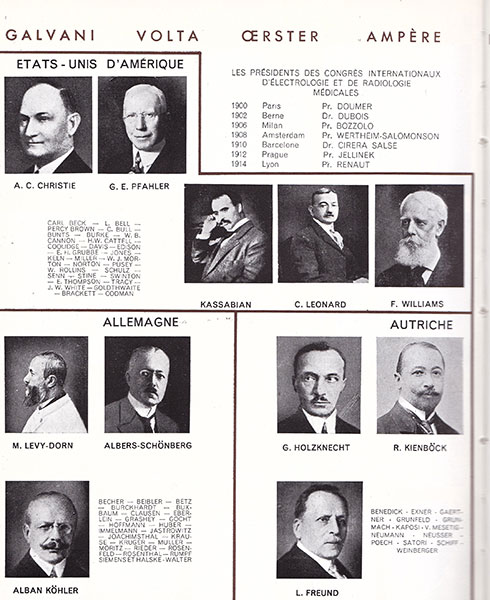
| A tribute II |
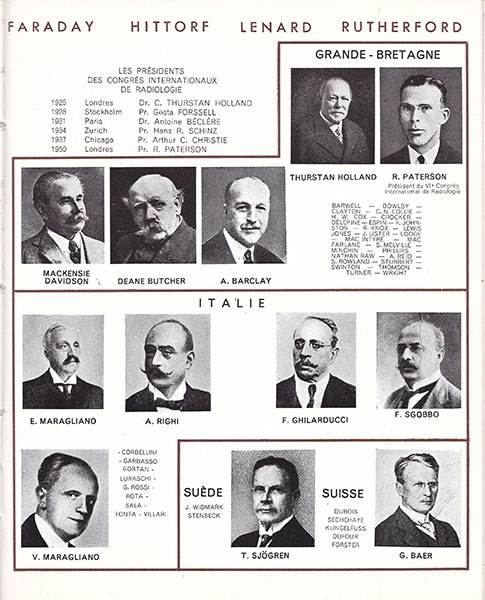
| A tribute III |

| A tribute IV |
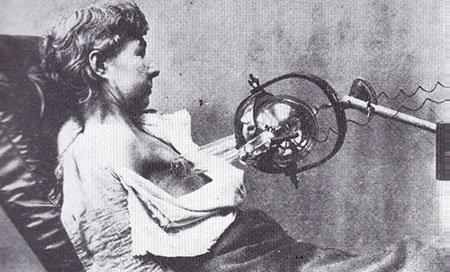
| Radiotherapy of a chest wall recurrence after mastectomy 1903. The patient positioning and glass collimation cone provided a reproducible setting. The field size was probably too small. |
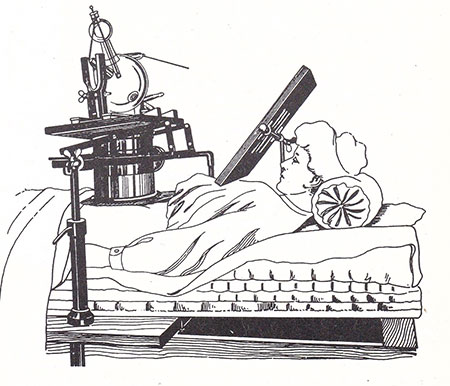
| Pelvic radiotherapy by Albers Schönberg (Germany, 1909). |
Significant progress in beam collimation was achieved in a few years compared to the previous figure: Improved X-ray tube, larger field size. The shield between the tube and the patient face suggests an attempt of radiation protection.*
| Karl-Axel Johansson Department of Radiation Physics |
Karl-Axel Johansson Department of Radiation Physics, Institute of Clinical Sciences, Sahlgrenska Academy, Gothenburg University, Gothenburg, Sweden. On this picture he wears the traditional Viking midsummer flower crown. He was the first radiophysicist to organize large multicentric institutional quality assurance of radiotherapy in the late 70s and early80s, first in Sweden and then within the EORTC radiotherapy group with Emmanuel van der Schueren and Jean-Claude Horiot. His unsurpassed experience and dedication allowed us to provide strong support and credibility to our clinical trials.
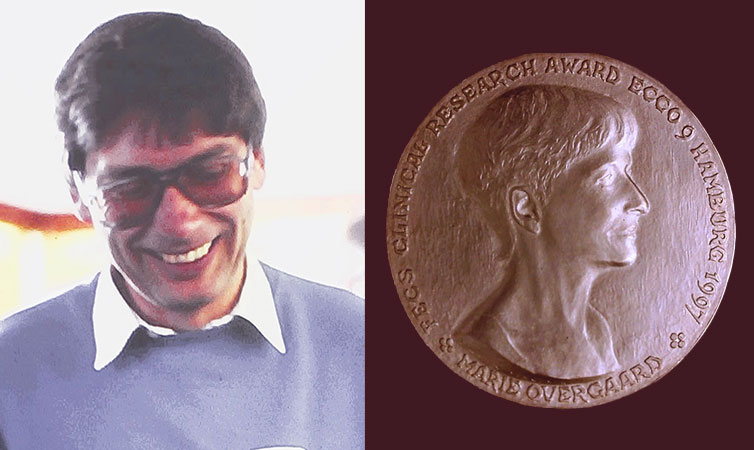
| Jens and Marie Overgaard |
Jens and Marie Overgaard. Leading figures of Danish Radiotherapy. Marie’s breast Danish clinical trials demonstrated the superiority of radiotherapy with breast preservation both for locoregional control and long-term survival. Jens spent a considerable energy in national Danish trials on radiosensitizers (Nimorazole) and hyperthermia. He was very active in the building of ESTRO educational activities.
| John Francis "Jack" Fowler (1925-2016) |
John Francis "Jack" Fowler (1925-2016), originally a physicist, became one of the best radiobiologists of his time, Director of the Gray laboratory (UK) for 20 years, he brought a major contribution to understand and improve clinical radiation biology. His concept of linear-quadratic dose-fractionation-time modelling helped to quantify biologically effective dose in a variety of normal tissues and tumors. He was the inspirator and/or friendly advisor to the design of most trials of altered fractionation and radiosensitizers. He trained many foremost radiobiologists and radio-oncologists in Europe and USA: Ged Adams, Adrian Begg, Julie Denekamp, Mike Joiner, Barry Michael, Lester Peters, Fiona Stewart, Liz Travis, Boris Vojnovic, Rodney Withers, Peter Wardman, George Wilson, and others. A tireless scientist and charismatic teacher.
| Julie Denekamp |
Julie Denekamp (1943-2001), originally a botanist and zoologist, was trained by Jack Fowler who made her a remarkable radiobiologist! Julie worked at the Gray Lab for 25 years. In 1977 she was Head of the Radiobiology Applied to Therapy Section. In 1988 she was appointed as Director, when Jack Fowler retired. Her contribution includes time factors and compensatory proliferation after fractionated radiotherapy, modifiers of the radiation response, hyperfractionation, radiosensitizer’s (CHART and ARCON trials), radioprotectors and hyperthermia. She developed the concept of targeting the tumor vasculature. In 1995 Julie was appointed as Professor of Radiobiology in the Oncology Department at Umea University. Together with husband Bo Littbrand, she built up a new Translational Research Group. She was very active and supportive within ESTRO. All of us who had the chance to meet and work with her will remember her generous personality.
| Participants from all European countries in an ESTRO teaching meeting organized by Jens Overgaard in Aarhus (DK) in the early 90's. |
The following names were covered in the Key Players section: Gilbert Hungerford Fletcher, Maurice Tubiana, Bernard Pierquin, Daniel Chassagne, Andrée Dutreix, Jean Papillon, Emmanuel van der Schueren, Jerzy Einhorn, Michael Peckham, Jean-Claude Horiot, Harry Bartelink.


